Friday, 7 August 2015

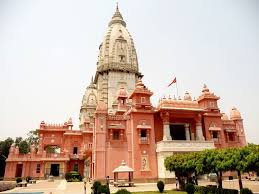
KASHI VISHWANATH JYOTIRLINGA TEMPLE

Where the Varana and Asi rivers join the Ganges, a beautiful city was built there in the ancient times. It was named Varanasi. Varanasi, a prime place of pilgrimage, a tribe called kasha used to live. Therefore, Varanasi was also known as Kashi. Near Kashi, Ganga flows in the shape of a bow. Hence it acquired special importance. A king called Deivodas expanded this area.
Varanasi is located in Uttarpradesh, in the Gangetic plains.

Purana of kashi vishwanath jyotirlinga 

Nirvikar cahitanya and Sanatan Brahma have assumed the form of Saguna Vishwarupa from the initial Nirgun Roopa or form. The Shiva Shakti roopa became the Purusha (man) and Stree (the woman) again. Prakriti and Purusha (Nature and man) (Shiva-Shakti) were once ordained by Shiva to do tapas in the universe in order to create the best being. He specified the best place for this purpose. When a prayer was held, Nirgun Shiva, with His own powers and aura, created a wonderful city called Panchakoshi. Vishnu, who resided there, spent a lot of time praying to Shiva after which several watersprings originated there. Vishnu was amazed at this wonderous event, and even as he tilled his head, a gemstone fell from his ear. Because of this place, it was also called Manikarnika. The entire Panch Koshi area of Manikarnika waters were then gathered into the Trident by Shiva. Then from the navel of Vishnu was born a lotus flower with Brahma in it. Brahma was ordained by Shiva to create a world, at which Brahma created this wonderful world. It had fifty crore Yojanas of area and fourteen lokas. In order to save the lives of these who are bound by their own actions or karma. Shiva kept panchakoshi city away from the entire universe. In this city, Shiva Himself established the saviour Muktidayak JyotirLinga, which He can never leave. Shiva removed this very Kashi from His Trident and set it in this mortal world. It was not to be destroyed when Brahma’s day ends, but during Pralay i.e., final destruction of the world, Shiva saved it by keeping it safe in his trident. So the kashi is called avimukta kshetra. In Kashi, the Avimukteshwar Linga is there forever. Those who can never hope for salvation, attain Moksha here. Kasi Viswanathar - Varanasi
This holiest city of Panchakoshi, with its capacity to destroy every conceivable sin, is the vehicle of a special Moksha by the name “Samyugha”. That is the reason why this city which is ruled by Brahma, Vishnu and Mahesha, is the place, where even divines want to die. Sarwaguna from inside and Tamoguna from outside, are the qualities of Rudra here. When prayed to, Vishwanatha Bahagavan Sri Shankar made this abode and resided there with Parvati.

Glory of Kashi 

Kashi city is the place for Moksha and Ganga. Those who live here attain Mukti or Salvation, even without having to travel to any place of pilgrimage. Any one, be it a man, woman, young, old, Sahava, pure or impure, Prasuta, Aprasuta, Swadesh, Andaja, Udibhaja, of whatever caste, all attain Moksha. There is not an iota of doubt in this. Whatever a person may be doing, eat, sleep or anything else, if he departs from this world from Avimukteshwar, he definitely attains Moksha. Any small act of goodness or Punyakarya, takes away all the sins. Good as well as bad people are born on this earth. But by living in Kashi, both attain Moksha. Later, several people came forward to build this temple. A king by the name Banar developed this city of pilgrimage. About one and half thousand beautiful temples were built here. The tower of the Vishweshwara temple is a hundred feet high.
Kashi nagar is so great that even if the universe is to be destroyed in Pralaya, it would remain intact. Dandapani and Kalabhairav guard this city. They stay there forever. On the Ganga banks eighty four bathing ghats are located. There are also several teerthkundas. They have been there right from the times of Vedas.

History of the Kashi Vishwanath Temple
 
Varanasi, which was a pious place of pilgrimage for the hindus, soon became an eyesore and source of jealousy for the Muslims. From 1033 to 1669 AD Kashi came under several destructive attacks. Temples were demolished and Masjids built there instead. But due to the dedication of the Hindu devotees, the JyotirLinag pilgrimage place continued to develop. During the reign of the British and the Marathas, this place really developed well. Even the Jaina and Boudha monks helped to keep the place of the city intact.
The Kashi Vishweshwar temple as we see it now was built by Ahalya Devi Holkar in 1777 AD. In 1785 AD, the then King of Kashi, Mansaram and his son Belvant Singh built many more temples near Varanasi. In 1755 AD, the Avadh pantof pratinidhi (representative) got the old temple of Bindumadhava repaired and renovated it beautifully. The kalabhairava temple was built by Srimant Baji Rao Peshwa in 1852 AD.
King Ranjit Singh had the Kashi Vishwanath temple towers covered in gold. A huge bell hangs in the temple. It was donated by the King of Nepal. Surrounding Saranath, there are many Budhhist stupas, Viharas and Chaitra grihas. In 1931 AD the mahabodhi society had built a very beautiful Buddha temple in Saranath.
The Hindu devotees visit Kashi to make offering. Here they perform many rituals and consider themselves blessed. Along side, several foreign tourists visit this place regularly. Places worth seeing include Ghats, temples, tapobhoomi and the scenic beauty of the surroundings. Kashi Kshetra and Sri Vishweswara JyotirLinga are connected as the holiest shrines in the world. The Ganga water here is considered as the nectar of the earth. Dying in Kashi or performing the final rites is considered as the way to the Heavens. Kashi - Rameshwar(1) yatra is the prime pilgrimage for the Hindus.


AN HONOUR KILLING - AN "HONOURED" CRIME

Honour killing, considered as an ‘honoured crime’ in most of the communities in India is said to have its origin from the nomadic people. Honour killing is killing a member of a family for dishonouring the family, in the name of caste, religion, honour etc. Most of the times the victims will be women, sometimes it will be men too. The reasons for the honour killings are disagreeing for an arranged marriage, disobeying family customs, rape victims, asking for divorce, marrying person who belongs to different caste, adultery, etc., Honour killing is seen in almost all parts of the world, but majority of them take place in the Middle East and South Asia. Various methods are used for honour killing, it can range from stoning, stabbing, hanging, acid attacks, poisoning etc. Most of the cases will be reported as suicides or accidents.

Defending the ‘honoured crime’!

- It is quite saddening to accept the fact that honour killing is considered a ‘honoured crime’ among the people who practice it. The Khap Panchayat has been subject to lot of criticism now-a-days for having initiated murder threats and violence to married couples who have defied the traditional norms of the caste system.

- Caste system is one of the 3 main pillars of the Indian society. There are communities and people who strongly believe in the concept of caste and think that it is their duty to defend and continue the system to future generations.

- Considering the role of caste in the past and the present system of reservations and the active role of caste in politics and the state has in many ways led to conserving the system of caste and the pride associated with one’s own caste.

No honour in ‘Honoured Crime’!

- There is nothing called honour in Honour killings. Killing in itself is a barbaric thing. The word ‘honour’ is just to glorify and defend the crime. They are sometimes committed in public just to show other members of the community that the same punishment will be given if such atrocities are committed. It just reflects their typical mindset in the present day.

- In India, honour killing violates the Fundamental Right – The Right to life. Indian laws clearly say that no one is given the right to harm the life of others.

- Honour killing places a big question mark on whole idea of Human Rights. It also creates certain amount of ‘fear psychosis’ in other members of the community, which is also one of their hidden agenda to keep the community members under check.

- Every nation claims that they give equal rights to women but honour killing proves that it is only on papers, because in most of the cases it will be female member of the family who will be killed. This shows the patriarchal nature of the society.

- As the Supreme Court upheld, there is nothing honourable in these killings and they are illegal. It is a very shameful murder. It reflects barbaric and feudal mentality.

Honour killings are acting as a new form of threat to the society today. The Global organisations have to take serious steps to avoid this and follow the principle – Live and Let Live. The Human Rights Organisation has to formulate few laws which should be accepted and implemented globally. Honour Killings should be replaced by Killing of casteism, hatred and ego. In India Honour killings are mainly found in the North India, especially in the states of Punjab, Rajasthan, Haryana and Uttar Pradesh. The main reason is caste. The literacy rate can also be the other reason. In South India Honour Killings are rare. Considering this point, it can be said that it is the mindset that needs to be changed, that essentially comes with education.


MRP – ADVANTAGES AND DISADVANTAGES


Introduction

MRP stands for Maximum Retail Price and it is the highest price that can be charged for a product which is sold in India. India is the only country in the world to operate an MRP system.

MRP is printed on all the packed commodities that are purchased by the consumers. It was introduced in 1990 by the Ministry of Civil Supplies Department of Legal Metrology. It was an amendment made to the Standards of Weights and Measures Act (Packaged Commodities’ Rules) (1976).

MRP has certain merits as well as demerits, which are enjoyed and borne by the manufacturers as well as consumers. Let's take a look!

Advantages of MRP

No over charging – Today, all the manufacturers print a tax inclusive price on all the packaged goods. Thus, there are less number of complaints by the customers on the issue of over-charging by the retailers.

Single rate - Because of a fixed MRP, the manufacturers produce a product with a fixed rate and it is applicable all over the country. It is considered to be a legal rate within all the states, gram panchayats and municipalities. MRP aims to create a uniform price throughout the country.

Purchasing power – MRP helps to create an awareness about the purchasing power among the consumers. Purchasing power is the financial ability of the consumer to buy a product or service. If the MRP rate of a product is not fixed, then the purchasing power is not certain till the product is bought.

Less loss – The main merit of MRP is that the occurrence of tax loss is very less. In most of the online shopping websites, you might have noticed that the MRP is high but the selling price is highly discounted.

Protects the rights of consumer – MRP is essential to protect the rights of the consumers in the remote or rural areas. In such areas, the consumers do not have the choice to go to various stores in search of the right price.

Disadvantages of MRP

Cost of transportation – Retailers in remote areas have to bear a high transportation cost and they cannot pass it on to the end customer. As they cannot charge a higher price than MRP, they end up making loss. MRP is calculated after the calculation of average cost which is required for the transportation of the products.

Old stock – At times, the manufacturers increase the MRP and sell the old stock on new price rates. When an explanation is demanded by the customers, the manufacturer tells that the price has increased due to the changes in duties or increase in cost of production.

Complicity – MRP provides a focal point to the retailers. It becomes a genuine uniform price and thus, creates retail price complicity. At the end, MRP turns out to be hurting the customers.

Consideration of other states – Before fixing the MRP rate of a product, the manufacturer, takes into account the highest tax rate which is charged on the product by any state in India. Even though the tax rates in your state may be low, you might pay a higher price because the tax rates in other states may be high.

Conclusion

Maximum Retail Price is the highest price that is charged on a product. The concept of MRP is existing in India since a long time. Now, the time has come to give the free markets an opportunity.

If MRP exists in the Indian market, it would allow a uniform price for the same product in different states.

But today, the rule of MRP is being violated rather than being recognized and manufacturers feel that it is time to abolish the concept of MRP from hereon.


WHATSAPP IS KILLING MIND...


 http://image.slidesharecdn.com/marketingusingwhatsapp-140604031707-phpapp02/95/marketing-using-whatsapp-2-638.jpg?cb=1423019449

Whatsapp is killing minds!

A Saudi man divorced his wife after she ignored his whatsapp messages. The husband said that his wife used to spend all her time on whatsapp messaging platform. Due to the addiction, she even ignored her children. Whatsapp is not a new thing in the market. Even the people who are not educated are well aware of the messaging platform. The messaging app that started as a boon can turn into a bane, if not used carefully. It is killing mind of people. Do you agree?

Yes

• The youngsters are getting addicted to the messaging platform like other addictive substances. It is more of an addiction rather than convenience.

• People are not using the messaging platform for connecting with friends or relatives instead they just want to check out the their presence on messaging platform.

• A messaging platform connects people, but whatsapp is creating bridges between people. The app, in many cases, is creating unnecessary doubts in relationships.

• The start as well as end of the day happens with whatsapp. And, if people don’t find any messages they start feeling low.

• People are so occupied with the use of whatsapp that they are unable to differentiate between real and factual relationships. We can easily notice that while you are talking all the time to your friends on Whatsapp, you hardly have an interaction with your immediate family. This also points out the fact that while people have a lot of friends on Whatsapp network, there's hardly any friend available whom they can talk out their heart face to face.

No

• Whatsapp has become the largest messaging app, and it is just because it has allowed people to come closer to each other.

• There are some people who are not involved in any work, and such people are only addicted to whatsapp, not everyone.

• Whatsapp has allowed the school friends and distant relatives to come and talk at one place. It doesn’t kill mind but helps the people to cherish the old good memories and relationships.

• In a world, where people don’t have time to meet friends, whatsapp has allowed people to share their problems with friends on messaging platform regardless of time and location.

• Whatsapp is now even used by many firms and organizations for sharing of important information among employees.

• If used properly, Whatsapp can help generate new business opportunities and close the existing deals faster.

Conclusion

Every thing in this world has two sides, one positive and one negative. The use of Whatsapp is no different. It is not a black or white app, but a grey app whose pros and cons are decided by the user himself. The people are more isolated than before in the present world. Some make their world better by using the app, and some make themselves more isolated after using this app. In all the cases, balance is the key.


Wednesday, 5 August 2015

DODITAL LAKE


m_Dodital-Lake

A freshwater lake located at a height of little more than 3000 meters above sea level is the Dodital Lake. It is also known as the Dhudital Lake, named after Lord Ganesha and is among the must see tourist places in India. It is believed that the lake is the abode of Lord Ganesha, and standing testimony to that fact is a temple dedicated to Him.
You need to cover a moderate trek from Uttarkashi in order to reach the lake. Don’t worry about the effort though. You will be refreshed at the sight of the lake.

Dodital, the lake with a lot of mythological history is a very happening trekking place at the present age. Dodital is the birth place of Lord Ganesha and is said to have witnessed the beheading of the deity by Lord Shiva. Bounded with lush greenery with crystal clear water makes this place as an ultimate place for the travel lovers and sightseers. At a height of 3307 meters above mean sea level, in the north of Uttarakashi is a perfect trekking destination and also holds potential for other adventure sports.

Dodital Trek route is through broad forests of Deodar , Rhododendron, Fir and Oak. This high altitude lake is crystal clear, in the midst of broad forest at a height of about 3,030 meters. This deep lake is the starting point of several rivers in this region. The lake is famous for its Himalayan trout, the exoticness rendered by surrounding forest and tranquility provided by the calm waters of the lake. This is an imposing destination with impeccable beauty and many a facts that are a lot adorable. Dodital provides a lot of opportunity to travelers to hang around in the Asi Ganga valley. There are subsidiary treks transporting one from Asi Ganga valley to Bhagirathi Ganga valley and to the Yamuna valley and vice versa. A part from a display of natural beauty there is an array of diversity in culture and heritage for which India is known for ages. The array of culture can be seen by travelers during their voyage through remote Himalayan settlements.

The trek from Dodital to Yamnotri takes you through high altitude grasslands and dense virgin forests. The scenery en-route is really astounding ! The trek for Dodi Tal commences from Uttarkashi or Kalyani, which can be approached by motor. Kalyani to Agoda is a gradual climb through woods, fields and villages along· a mule track. The trek from Agoda to Dodi Tal is steep and through thick forests.


Dodital during June

The Dodital Trek is a bird watchers paradise. Throughout the trek birds like the Himalayan Whistling Thrush, Himalayan Tree Pie, Himalayan Babbler, Bush Robin, Pink Finch, Brown Fronted Woodpecker, Grey Tit, Munia, Common Chiffchaff, Red-Billed Blue Magpie, Grey Shrike, Tailor Bird, Himalayan Monal (Impeyan Pheasant) are commonly seen.

 Himalayan-Monal-on-Dodital-Trek


ROOPKUND LAKE


 m_Roopkund-Lake

The Himalayan region is blessed with several gorgeous high altitude lakes. But the one which catches the maximum attention is the Roopkund Lake, gorgeous, and shrouded in mystery. The lake is situated at a height of about 5,000 meters above sea level in Uttaranchal’s Chamoli District. During the summer season, when the ice melts in the lake, you can see several hundred corpses floating in the lake.

The skeletons of the corpses have been well preserved because f the cold climatic conditions. Scientific evidence suggests that the corpses date back to around 12th century, but nobody knows the real story behind the mass deaths. Roopkund Lake is probably the only place on earth which continues to be beautiful despite the presence of about hundred skeletons.

What do you expect to see when the glacial ice melts at 5000 meters above sea level? Probably some stocked water, a small lake or a water stream and some fish fossils etc. How about spotting more than 500 human skeletons? Yes, that’s the mystery of Roopkund Lake situated in Uttarakhand state of India. It is located in uninhabited high mountain region of Chamoli district of Uttarakhanduttr. HK Madhwal who was then a Nanda Devi Game Reserve ranger discovered the floating skeletons at Roopkund in 1942. Reports said that these bones were from late 19th century but the carbon dating samples collected from skeletons in 1960 revealed that these people were from 12th – 15th century. The cause of this mass death is assumed to be a massive landslide or blizzard.
The Indian and European scientists carried out an exploration project in 2004 and found more information about these skeletons. They found jewelry, skulls, bones and preserved body tissues, which were of great importance. The DNA test revealed that there were mainly two groups of people. One marked by the shorter stature of the skeletons while the other is significantly taller people who were closely related to Kokanastha Brahmins of Maharashtra (as suggested DNA Mutations). Some British explorers to Roopkund and many scholars attribute the bones to General Zorawar Singh of Kashmir, and his men, who are said to have lost their way and perished in the high Himalayas on their return journey after the Battle of Tibet in 1841. Later it was found that these skeletons belonged to 12th – 15th century. The exact whereabouts of these skeletons is still a mystery. Many historians linked the corpses to an unsuccessful attack by Mohammad Tughlak on the Garhwal Himalaya. Still others believed that the remains were of those of victims of an unknown epidemic. Some anthropologists also put forward a theory of ritual suicide.
Otherwise, Roopkund is one of the most beautiful and picturesque tourist destinations in Himalayan kingdom. It is located near two popular Himalayan Peaks namely Trishul which is 7120 m high and the other is Nandghungti which is 6310 meter high. It is rerouting to one of the popular pilgrim site in Uttarakhand named Nanda Devi. The skeleton lake is covered with ice for most of the year. However, a journey to Roopkund is a breathtaking experience everybody should have atleast once.

How to Reach Roopkund

There are different routes for a trek to Roopkund. However, most of the trekkers and adventure travelers travel to Lohajung or Wan by road. From there they reach Ran ki dhar by climbing a hillock at Wan. So, the way is Kathgodam – Ranikhet – Garur- Gwaldam – Debal (1220 m) – Bagrigad (1890 m) – Mundoli village – Lohajung pass – Wan village (2590 m) – Bedni Bugyal (3660 m) – Baghubasa – Kalu Vinayak – Roopkund
Roopkund’s skeletons were featured in a National Geographic documentary “Riddles Of The Dead: Skeleton Lake”.


BELUM CAVES


 m_Belum-Caves1

Belum caves in Vishakapatnam district are the second largest caves in India after the Meghalaya caves and are created naturally by the action of flowing water on limestone deposits forming stalactites and stalagmites, siphons, water galleries etc. The Belum Caves have got their name from the Sanskrit word “Bilum” which means hole. In Telugu these caves are called BelumGuhalu or Belum caves. The depth of the caves reaches to 150 ft below ground level and length is more than 3 Kms. (3229 metres)
The relics found in the caves are from the Buddhist era proving that Buddhist monks were living in these caves. There are other relics from older times which prove that these caves were inhabited around 4500 BC. These ancient caves were first discovered by an English inspector of land and property called Robert Bruce Foote in 1884 however it was only in the 1980s that the discovery was further explored by a German team and then in 1988 the area around the caves was given a protected status. Andhra Pradesh Tourism Development Corporation (APTDC) then developed part of the caves so that they could be opened to touristsfrom February 2002.Now tourists can see 1.5kms of the 3.5 kms of the caves discovered by the APTDC.
The Belum caves of black limestone have a maze of sixteen paths and an entrance chamber.

History of Belum Caves

The Belum Caves are prehistoric and have been inhabited by humans at different times in the history of these natural caves. The local population was aware of the presence of the caves but officially the existence of Belum caves was reported by an English Surveyor Mr. RobertBruce Foote in 1884 and confirmed by a German speleological team in 1982. After the historical and archeological importance of these caves became evident, the Andhra Pradesh Government cordoned off the area andthe Archeology Department with ASI (Archeological Survey of India) explored the area and collected and studied the relics found there. The area of the caves was then given to Andhra Pradesh Tourism Development Corporation (APTDC)for development and a part of these caves were developed as a tourist attraction and opened for public in the year 2000.
As recorded in historical archives and from the evidence found in the caves, these caves were used by Jain as well as Buddhist monks at different periods of time. In fact, relics found in the cave point to human habitation in the caves up to 4500 years BC. The relics and artifacts found here have been classified and studied and are now exhibited in the Anantapur Museum.

Location of Cave

Belum Caves are located nearBelum Village that falls in KolimigundlaMandal of Kurnool District of Andhra Pradesh. The mandalheadquartersKolimigundlatownis only 3 km from BelumCaves.Anantapur where the Anantapur Museum is located and where many of the artifacts found in Belum caves are exhibited, is 87 Kms from Belum Caves.

Main Sections of Belum Caves

Belum caves are well known for different natural formations of stalactites and stalagmites in chamber-like sections formed by the flowing underground water.
  • The entrance arch or gate is called PillidwaramorSimhadwaram means cat’s gate or lion’s gate is an arch like structure formed naturally by the stalactites that have taken the formed in the profile of the head of a lion or a large cat.
  • KotilingaluChamber or the Chamber of a million “Shiva Lingams” is a chamber that contains innumerable natural stalactitesthat have formed in the shape of Shiva Lingams. The effect ofs thousands of such naturally-formed “Shiva Lingams” gives this chamber an unreal air. It also has a single largecolumn formation where stalactite from the ceiling has joined the stalagmites from the ground
  • Patalaganga meaning a river of the nether world and is a small perennial underground stream that flows in the caves from the south-east to the north-west direction and disappears in the bowels of the earth. This stream then flows underground in the direction of the Belum Village and ends in a well at a distance of two kms from Belum caves.
  • SaptasvaralaGuha or Chamber or Cave of the Seven Musical Notes. The stalactites in this part of Belum Caves when hit with a stick or knuckles of the hand emit musical notes. This chamber is open for visitors since 2006.
  • DhyanMandir or Temple of Meditation is a large chamber near the entrance. This section was used by Jain and Buddhist monksas is evident from the objects found here and which are now showcased in Anantapur Museum. In this hall one can see a natural formation that looks like bedstead complete with a pillow. Local lore tells of ancient mendicants that lived. An interesting formation at Meditation hall looks like the bed with pillow to recline.
  • Chamber of a Thousand Hoods: This chamber has stalactites that have taken the shape of a hood of the cobra. The roof of the cave has the surreal look as if innumerable cobras are looking down from the ceiling with their hoods open.
  • Banyan Tree Hall is another chamber that has a large column of stalactites and stalagmites that have joined and many other stalactites in different lengths and sizes that look like the branchesor aerial roots hanging from the banyan tree.In the local lingo it is called "Voodalamari" which means Banyan Tree.
  • Mandapamwhich means Hall with pillars is a large chamber with glorious stalactite formations that look like pillars on the sides. The whole effect is that of a huge hall with pillars.
Historical importance

Belum Caves are geologically and historically important caves. There are indications that Jains and Buddhists monks occupied these caves centuries ago. Many Buddhists relics were found inside the caves. These relics are now housed in Museum at Ananthapur.
Archaeological survey of India (ASI) also found remnants of vessels, etc. of pre-Buddhist era and has dated the remnants of vessels found in the caves to 4500 BC.

 m_Belum-Caves2